

FUSA presents
Neurodivergent Panel
A live, student-centred conversation about neurodiverse student experience at Flinders, with a focus on intersectionality, barriers in education, belonging, self-advocacy, invisible disability and what meaningful support looks like in practice.
Centring people with lived experience, the event is designed to feel calm, practical and thoughtful rather than like a formal lecture. You can contribute in the way that works for you, including speaking, submitting questions digitally, responding anonymously in writing or simply listening.
Students and staff are welcome, with the conversation primarily centred on people with lived experience of neurodivergence.
Lived experience is central to the conversation, but the issues are bigger than individuals: the event also asks what systems, structures and practices at university can do differently.
About the conversation
Neurodivergence, university and meaningful inclusion
The discussion will bring together different lived, student, research and professional perspectives on neurodivergence, while keeping the experiences of neurodivergent people at the centre.
The conversation
- Intersectionality and neurodivergent experience
- Accessibility and barriers in education
- Belonging and connection at university
- Self-advocacy and accessing support
- Invisible disability
- Reasonable adjustments and inflexible systems
- Individual support versus genuinely inclusive systems
- What meaningful support looks like in practice
More than a panel
This is intended to be a facilitated conversation rather than a formal presentation. The room will be set up to support discussion, reflection and different ways of participating.
People can speak to the room, contribute digitally, respond through written or visual prompts, take part in smaller conversations where appropriate, or simply listen.
What happens with the conversation?
With participants’ consent, FUSA may bring together de-identified themes, barriers and practical suggestions raised through the event and share them with relevant University teams and allies who are in a position to improve accessibility, student experience and university systems.
Individual comments, experiences or stories will not be attributed to participants without explicit permission.
Guests
Meet the panel
Four speakers will bring different lived, student, research and professional perspectives to the conversation.
Louise O’Brien
Autistic advocate, human rights activist and Flinders student
Louise is an autistic advocate and human rights activist dedicated to advancing meaningful reform within the disability sector. Drawing on lived experience as a parent, participant and sector professional, her work spans support coordination, advocacy, mentoring and community engagement. She is committed to promoting ethical, person-centred practice and strengthening accountability, inclusion and professional standards across the NDIS landscape. Louise has returned to study at Flinders to undertake the Graduate Certificate in Positive Behaviour Support.
Tia Spray
PhD student and President, Flinders Neurodivergent Study Support and Advocacy
Tia is a full-time PhD student at Flinders University whose research focuses on neurodivergent disability and experiences through a neurodiversity-affirming perspective. Tia is also President of Flinders Neurodivergent Study Support and Advocacy, a student-led community run by and for neurodivergent students. Through research and student advocacy, Tia is interested in neuroinclusive approaches to university life, peer support and creating environments where neurodivergent students can participate, connect and study in ways that work for them.
Dr Tova Rozengarten
Scholarly Fellow, Flinders University
Dr Tova Rozengarten is a Scholarly Fellow at Flinders University whose teaching and research explore disability theory, feminist disability studies, crip theory and representations of disability in popular culture. Tova’s doctoral research examined gendered disability and ableist representation in cinema, with a particular focus on how cultural narratives can reinforce or challenge harmful stereotypes. Tova has also contributed to research examining disability support, recognition and the everyday experiences of people receiving and providing support.
Dr Cambrey Payne
Lecturer in Women’s and Gender Studies, Flinders University
Dr Cambrey Payne is a Lecturer in Women’s and Gender Studies at Flinders University. Cambrey’s research brings together critical disability, feminist and queer theory, with a particular interest in autistic embodiment, gender diversity, queer identities and the politics of identity. His PhD, Embodying Autism: the importance of vibrancy and connection in autistic lives, challenges bio-essentialist understandings of autism and explores masking, meaningful relationships and alternative ways of understanding autistic experience.
Event format
A conversation with room to pause.
The final format is still being developed with speakers and stakeholders. This proposed structure gives the event a clear shape while allowing the conversation to respond to the people in the room.
In-person arrivals, online participants joining and time to get comfortable.
Introductions, participation options, respectful listening, consent, privacy and recording boundaries.
Lived experience, intersectionality and barriers in education.
Slido, anonymous written prompts, visual response cards and potentially smaller conversations.
A genuine pause in the middle of the event. People can step away, reset, talk informally or simply take a break.
Belonging, self-advocacy, invisible disability and what meaningful support looks like in practice.
Reflections and contributions from people in the room and online.
Wrap-up and an explanation of how de-identified themes and ideas may be used after the event.
Access and participation
Join the conversation your way.
There is no expectation that everyone participates in the same way. You can contribute as much or as little as works for you.
Getting into the space
- Alere, Level 2, Student Hub, Bedford Park Campus.
- Lift access is available from the ground floor of the Student Hub.
- There is step-free access into the event space.
- Accessible bathrooms are located next to the event space.
During the event
- Live captions will be available on screen through Microsoft Teams.
- You can leave and re-enter the event space as needed.
- Support people are welcome.
- A range of spoken, written, anonymous and digital participation options will be available.
- You are also welcome to attend without speaking or asking a question.
Joining online
- The event will also be accessible through Microsoft Teams.
- Online attendees will have access to live captions.
- Digital participation options will provide ways to contribute without speaking.
- The Teams link will be provided through the online registration ticket.
Food and dietary requirements
- Snacks will be provided during the mid-event break.
- The in-person registration form will ask about dietary requirements.
- Registration will also provide an opportunity to tell FUSA about access requirements or adjustments that would support attendance.
Bookings
Choose how you’ll join.
Separate Humanitix ticket options will be available for attending in person or joining online.
Attend in person
Alere, Level 2
Student Hub
Bedford Park Campus
In-person registration will include dietary and accessibility questions.
Join online
Join the conversation remotely through Microsoft Teams. Joining information will be provided to registered online attendees.
Privacy, consent and respectful participation
Clear boundaries for a personal conversation.
The event may include personal experiences. We want people to understand how the conversation will work before deciding what they want to share.
No audio or video recording
The discussion will not be audio or video recorded. Microsoft Teams will be used for live online participation and captions, not to create a recording of the session.
You decide what you share
There is no expectation that attendees disclose personal information, diagnoses or difficult experiences. You choose whether you contribute, how you contribute and how personal your contribution is.
Respecting other people’s stories
Because this is a group event, complete confidentiality cannot be guaranteed. A clear expectation of respectful listening will be set at the beginning of the session, including not repeating or identifying another person’s personal story outside the event.
Sharing themes, not identities
With consent, FUSA may bring together de-identified themes, barriers and practical suggestions from the discussion and share them with relevant University teams and allies to help inform improvements to accessibility, support and student experience.
If FUSA wants to use a specific quote, story or contribution in an identifiable way after the event, explicit permission will be sought from that person first.
Live graphic recording
Turning the conversation into a visual record.
Artist and educator Ruby Chew will create a live visual record of key themes, ideas and reflections as the conversation unfolds.
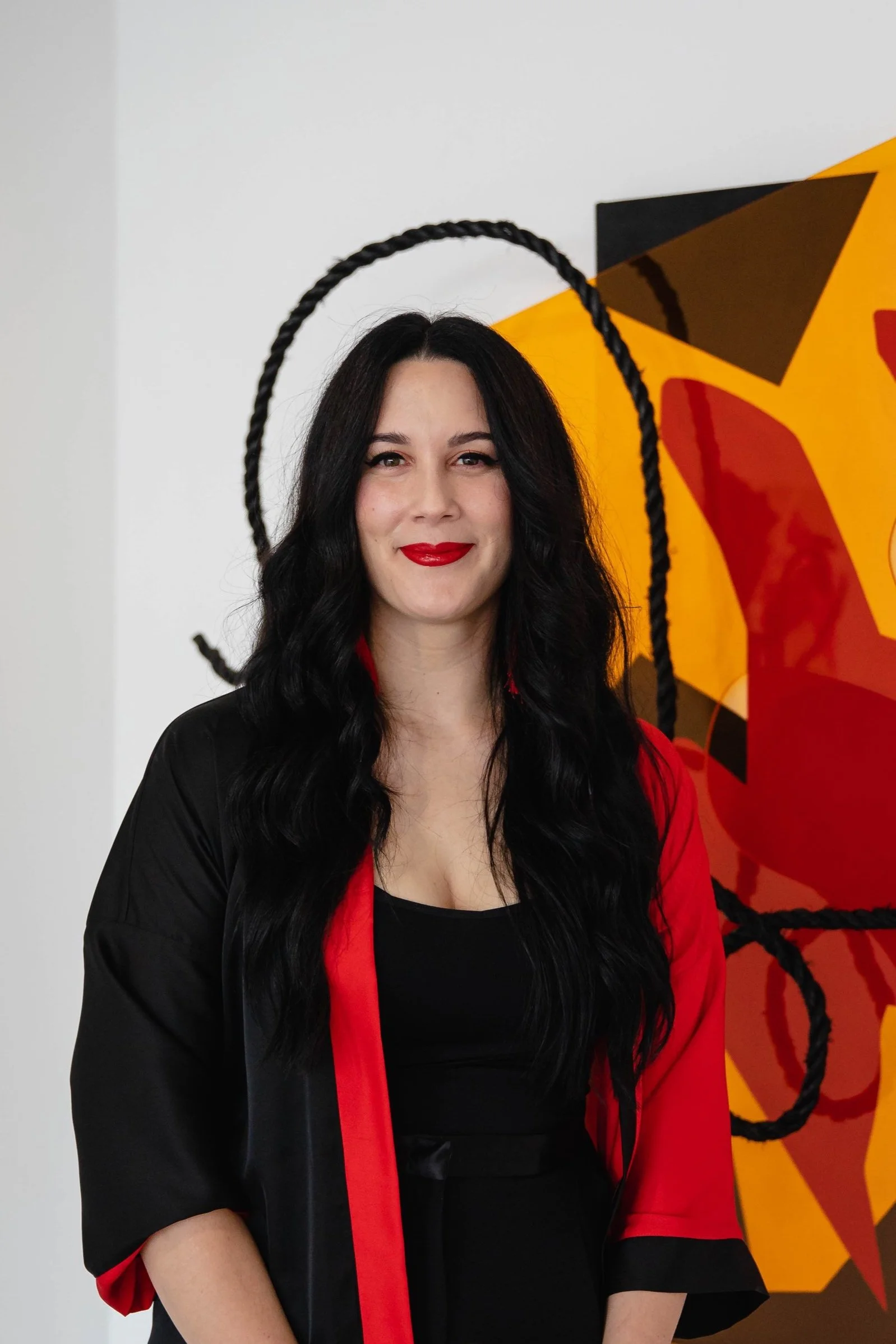
Photo: Rosina Possingham
Ruby Chew
Ruby is an award-winning practising visual artist and experienced educator whose practice spans painting, drawing, sculpture and printmaking. She has more than 15 years’ experience designing and delivering creative programs and workshops in Adelaide, interstate and overseas, and holds a Master of Teaching and a Visual Arts Honours degree.
During the event, Ruby will capture key ideas and themes visually as the discussion happens, creating another way of reflecting the conversation beyond traditional written notes.
FAQs
Good to know.
Who can come?
The event welcomes Flinders students and staff. The conversation is primarily centred on people with lived experience of neurodivergence, while also exploring broader systemic issues within university life.
Do I have to speak or ask a question?
No. You are welcome to simply listen. If you want to contribute, options will include speaking, Slido, written questions, anonymous prompts and visual activities.
Can I leave the room during the event?
Yes. You can leave and re-enter the event space as needed.
Can I bring a support person?
Yes. Support people are welcome.
Will the event be recorded?
No audio or video recording of the discussion will be made. Microsoft Teams will be used to support online participation and live captions.
What is live graphic recording?
Ruby Chew will visually capture themes, ideas and reflections as the conversation unfolds. This creates an illustrated record of key themes without audio or video recording the discussion.
What will happen with ideas raised at the event?
With consent, FUSA may synthesise de-identified themes and practical suggestions and share them with relevant University teams and allies. Individual experiences will not be attributed without explicit permission.
Questions about the event or accessibility?
Flinders Community Grants
A student idea, brought to campus.
This event grew from Louise O’Brien’s idea through Flinders Community Grants and is part of FUSA’s work to support student-led ideas that build connection, inclusion and belonging at Flinders.
Flinders Community Grants is supported by Medibank.

